Key takeaways
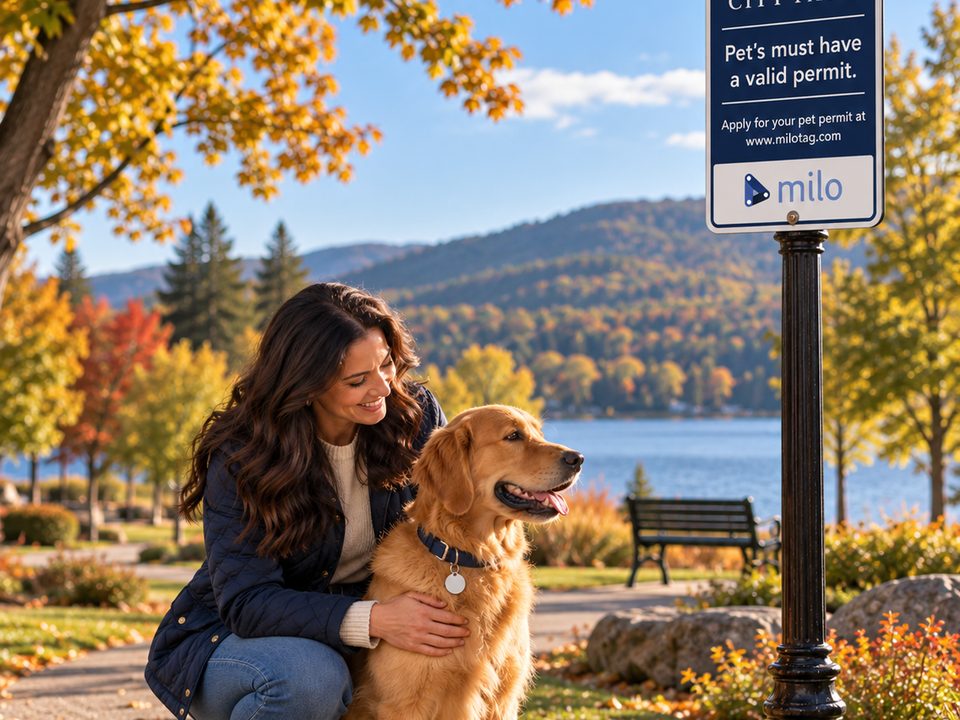
- Compliance goes up when getting a tag takes a few minutes on a phone instead of a trip to town hall.
- Renewals do most of the work: a pre-filled file and reminders by email, text and mail keep pets on the roll year after year.
- Keep the counter. Staff should take walk-in payments on the same file residents see online.
- Animal control needs the live record in the field, not a spreadsheet exported last month.
Almost every municipality has a rule that says dogs must be licensed. The hard part is getting residents to do it, and to do it again next year. When a tag means a paper form and a trip to the counter during office hours, many owners put it off. The rule stays on the books, but the roll covers only part of the dogs in town.
Moving licensing online fixes the easy part: residents can apply and pay from a phone. This guide covers the rest, so that staff, the counter and animal control all work from one file.
Why dog licensing compliance stalls
Three things usually hold a program back.
- Applying takes effort. A form to print, proof of vaccination to find, and a visit in person. Each step loses some owners.
- Renewal depends on memory. If nobody reminds the owner, the tag quietly lapses after the first year.
- Enforcement happens by chance. In the Township of Essex, Ontario, the animal by-law used to be enforced only when an officer happened to meet a pet without a tag.
None of these is a staffing problem. They are process problems, and each one has a practical fix.
What an online licensing program has to cover
A web form that emails a PDF to the clerk is not a licensing program. Look for these pieces working together:
- One account, one file per pet. The owner uploads vaccination and microchip records once, and they stay on the file.
- Payment on the same invoice, whether the resident pays online by card or in person at the counter.
- A tag number tied to the file, and a clear way to get the physical tag to the owner.
- Renewal without retyping. Next year the owner confirms the details and pays.
- Room for kennel and breeding permits, with their own documents, inspections and fees.
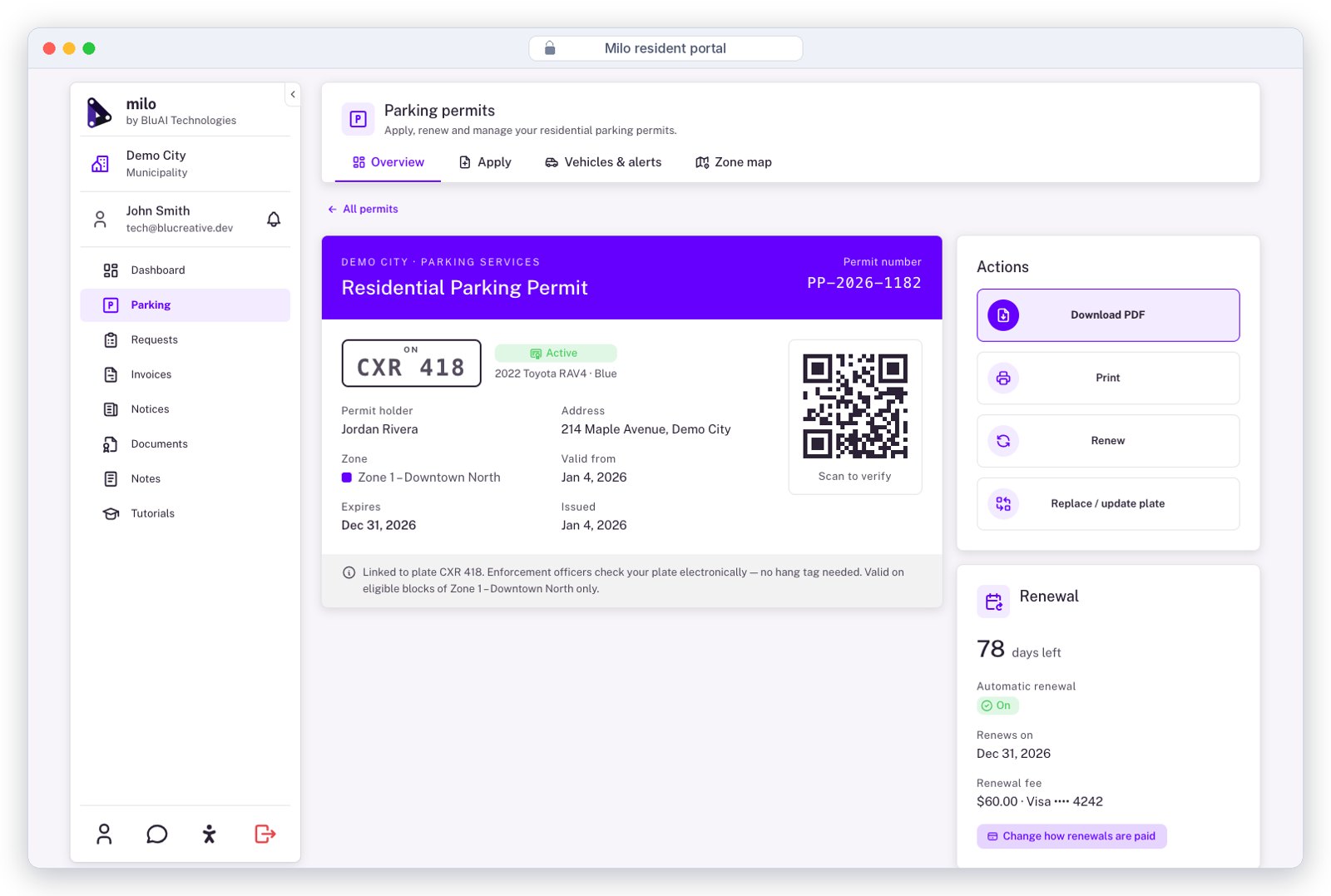
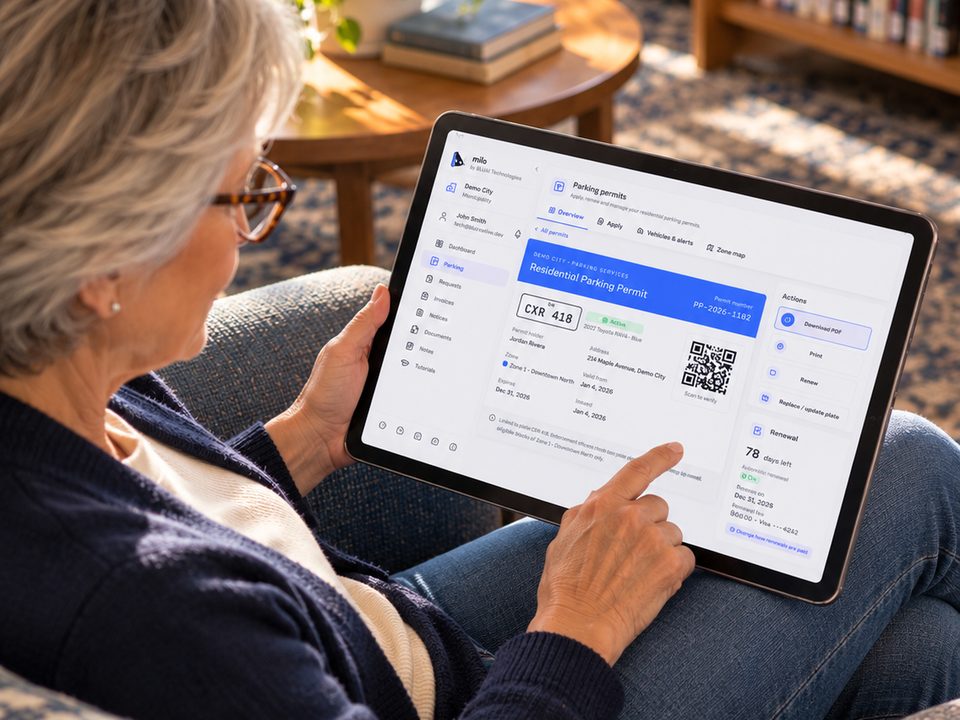
This is how pet and kennel licensing works in Milo, through the same resident portal used for every other permit.
Renewals are where the numbers are won
A first tag is one transaction. A renewal is that same transaction every year for the life of the pet. A program that renews well grows on its own, because each new registration stays on the roll.
Set reminders by email and text ahead of the expiry date, for example 30 days and 7 days before. Send the owner straight to a pre-filled file, so renewing takes a minute.
Not every resident is online. For those who are not, a printed renewal notice still works. Milo's mail-out service prints and mails invoices, renewal notices and tags from the same file, and logs each piece on it. Where local rules allow, fees still owing at the end of the cycle can be exported for the tax roll.
Keep the counter, on the same file
Going online does not mean closing the counter. Some residents will always prefer to pay in person, and they should not end up in a separate system. Staff look up the owner, take the payment and hand over a receipt, and the file updates for everyone.
Essex runs one online portal and three counter locations on a single admin workspace. A clerk at any counter sees the same record the resident sees at home.
Give animal control the same record
An officer who finds a dog should be able to check its tag on the spot. With the file open in the field, officers can see the owner's record, add dated tasks, request a payment or issue a fine.
If animal control is a contractor, give them an account limited to what they need. They work the same files without seeing the rest of the municipality's data.
What changed in Essex
The Township of Essex moved its animal licensing to Milo in 2021. Residents could finish online in minutes, counter staff and animal control worked from the same file, and the program has run without interruption since, including a move to a new generation of the platform.
Essex has since added kennel permits, shared pets, a lost-pet page and community notices on the same platform.
Questions to ask before you choose a system
- Can a resident finish on a phone in a few minutes, uploads included?
- Are renewals pre-filled, and who sends the reminders?
- Can counter staff take in-person payments on the same file?
- What does animal control see in the field?
- How are tag numbers assigned, and how do tags reach owners?
- Can we add kennel permits, or other permit types, later without a new project?
- Where is the data hosted, and who can see it? Compare the answer with a published security page.
A vendor who can show each answer on screen, with a real program, is worth more than one who promises it in a proposal.